When cargo stops moving, delays can spread quickly through a port. Trucks wait, storage areas become congested and crews lost time working around equipment that cannot keep up.
The right port material handling equipment helps keep cargo moving while managing fuel costs, supporting safer handling and reducing unexpected downtime. Equipment suited to environment and application gives operators the capabilities they need to handle each load efficiently.
For ports in North Carolina, South Carolina and Georgia, forklifts, reachstackers and empty container handlers can each contribute to a more productive operation.
What Makes Material Handling at Ports Challenging
Port operations bring together heavy cargo, large equipment and tight schedules. A machine may need to lift loaded containers, maneuver between stacks or handle freight moving between a storage area and a truck.
Several conditions make this work demanding:
- Heavy and varied loads: Loaded containers, empty containers and palletized freight have different handling requirements.
- Limited yard space: Equipment needs room to turn, position loads and access storage areas without disrupting traffic.
- Changing workloads: Vessel arrivals and cargo volumes can create periods of intensive use.
- Outdoor exposure: Salt, air, rain and heat affect inspection and maintenance needs.
- Busy travel routes: Operators must work around other vehicles, personnel and visibility restrictions created by cargo.
The right cargo handling equipment helps mitigate these factors, improving operations in several ways.
Keep Cargo Moving Efficiently
The right equipment helps operators move cargo with less repositioning and fewer delays. That can shorten truck wait times and prevent congestion from building around loading and storage areas.
A fleet equipped to handle the port’s cargo mix also makes it easier to manage simultaneous tasks. Crews can continue handling incoming freight while other equipment prepares cargo for departure, helping the operation keep pace during busy periods.
Reduce Operating Costs with Fuel Efficiency
Fuel consumption adds up across long shifts and repeated handling cycles. Equipment that allows operators to match power to the task can help manage these costs.
Kalmar DRG450-65S5 reachstackers feature three Eco Drive Modes: Power, Normal and Economy. Power Mode supports maximum performance, while Normal and Economy modes offer opportunities to reduce fuel use. Kalmar reports fuel savings of up to 20% in Economy Mode. Available options such as automatic engine shutdown can also help reduce unnecessary idling.
Kalmar DCG90-45ES empty container handlers range also offers selectable operating modes. Users can experience 5% to 15% lower running and fuel costs in Normal Mode and 10% to 25% lower costs in Economy Mode, with reduced engine speed. Actual results depend on the equipment’s configuration and operating conditions.
These modes give operators options for managing fuel consumption as workloads change. The appropriate setting depends on the pace and handling demands of the operation.
Support Safer Handling Around Large Loads
Equipment that provides clear visibility helps operators monitor their surroundings during travel, reversing and load placement. This is especially valuable when working around container stacks, trucks and personnel.
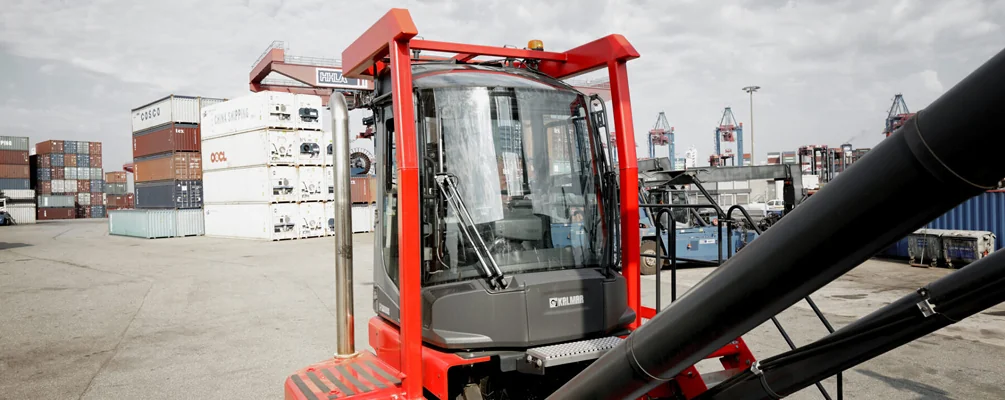
Depending on the model and configuration, cameras, reversing warnings and load monitoring features can provide additional operator support. Kalmar’s empty container handlers offer improved cabin visibility and available reversing cameras and warning systems.
Operator comfort also contributes to the working environment. Adjustable seating and accessible controls can help reduce strain during long shifts, while clear sightlines make it easier to monitor loads and nearby activity.
These features support safer handling alongside operator training and site traffic procedures.
Reduce Unexpected Downtime
An unexpected breakdown can leave cargo waiting and force other equipment to take on additional work. Equipment suited to the operating workload, with accessible service components and diagnostic capabilities, can help teams maintain machines and address problems efficiently.
Reliable parts availability and service support also helps limit disruptions when repairs are needed. Planned maintenance gives operations a way to schedule service around cargo demands and address wear before it leads to a breakdown.
G&W provides Kalmar parts and service support, along with planned maintenance agreements that help customers establish a service schedule for their operations.
How to Choose the Right Port Material Handling Equipment
To achieve these benefits, start by defining the work your equipment needs to perform.
Consider:
- Cargo types, weights and dimensions
- Required lifting heights and reach
- Yard layout, turning space and surface conditions
- Expected operating hours and handling volume
- Fuel consumption and maintenance costs
- Operator visibility and available safety features
- Access to parts and service support
Evaluate fuel efficiency alongside productivity. A lower fuel bill is most useful when the machine meets your handling requirements. Travel distances, idle time and operator practices should all be part of that assessment.
Your cargo mix will also help determine which types of equipment belong in your fleet.
Reachstackers for Loaded Containers
A reachstacker uses a telescopic boom and container spreader to lift and position shipping containers. Its ability to reach into container rows gives operators flexibility when organizing storage and accessing loads.
Kalmar DRG450-65S5 reachstackers can lift up to 45 metric tons when handling containers closest to the machine. Its lifting capacity decreases as it reaches into rows farther away, so equipment selection should account for both container weight and the required reach.
Also consider the required stacking height and whether the machine can maneuver within your yard layout.
Empty Container Handlers for Container Storage
Empty containers still take up valuable space and require frequent repositioning. Dedicated empty container handlers allow ports to organize those containers while keeping equipment for heavier loads available for other work.
Kalmar DCG90-45ES empty container handlers are single-container models with a rated lifting capacity of 9 metric tons. It is offered with different mast configurations, allowing buyers to select equipment around their stacking requirements.
The right configuration depends on container dimensions, required stacking height and the space available for maneuvering.
Forklifts for Other Port Cargo
Forklifts support the movement of palletized freight and other cargo that requires forks or application-specific attachments.
When selecting high-capacity forklifts, review load weight and dimensions along with the attachment, lifting height and operating surface. A long or irregular load can create different handling requirements than a compact load of the same weight..
If you are researching a shipping container forklift, first identify whether the job involves moving the container itself or handling freight inside it. Those tasks can require very different equipment.
Find Equipment That Fits Your Port Operation
G&W can help you evaluate Kalmar equipment for your cargo handling needs in North Carolina, South Carolina and Georgia. Whether you are considering a reachstacker, empty container handler or high-capacity forklift, our team can help you assess the application and plan for ongoing service.
Explore the Kalmar line of high-capacity forklifts or contact G&W to discuss equipment for your port operation.