Forklifts are built to handle demanding workloads day after day, but even well-maintained equipment eventually reaches a point when replacement makes more sense than another repair. In other cases, the forklift itself may still have life left, but changes in your operation means it is no longer the right equipment for the job.
Knowing when to consider a forklift replacement can help you avoid excessive maintenance costs, reduce unexpected downtime and make sure your equipment continues to meet the demands of your operation
When Should I Replace My Forklift?
A new forklift is a big investment, so it can be difficult to know when to pull the trigger. Here are three signs it may be time to start considering a forklift replacement.
1. Maintenance Costs and Downtime Are Increasing
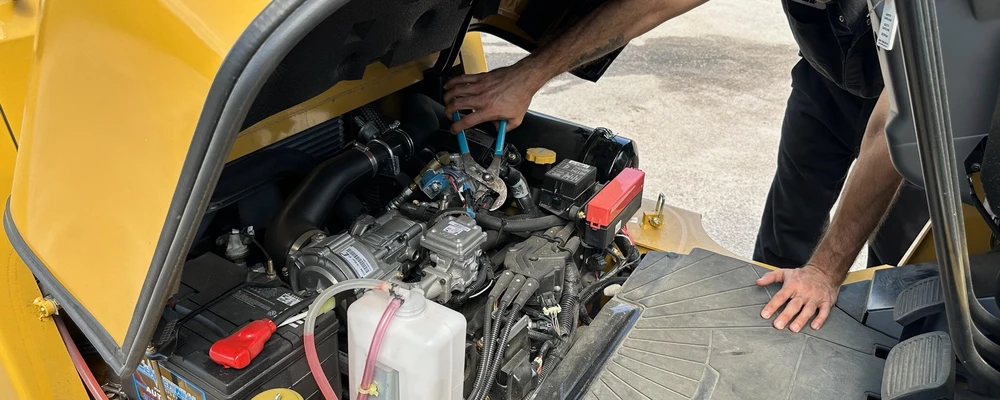
An occasional repair is a normal part of owning and operating a forklift. When repairs become more frequent or expensive, it is worth looking at whether continuing to invest in the truck makes financial sense.
Rather than evaluating each repair individually, consider the overall impact by asking the following questions:
- Are you seeing the same problems repeatedly?
- Have repair costs increased significantly over the past year?
- Is the truck spending more time out of service, putting more hours and strain on other forklifts?
- Is unplanned downtime disrupting schedules?
2. Your Application or Operational Needs Have Changed
The forklift you purchased several years ago was likely selected for the loads, facility, and workload you had at the time. If those requirements have changes, your current truck may no longer be the best fit. You may want to consider a new truck if:
- You are moving more products or operating for longer hours.
- The materials you handle are heavier or larger than before, requiring greater lifting capacity.
- A new warehouse layout. has different aisle widths, lift heights or storage configurations.
- You have an application where a different power source (internal combustion or electric) makes sense.
When your application changes, avoid trying to make existing equipment handle work it was not designed to do. Reassessing your forklift needs can help you find equipment that supports the way your operation works today and where it is headed next.
3. Your Forklift Is Approaching the End of Its Lifespan
Useful service life varies based on the application, maintenance history, operating environment, workload and how many hours the truck runs each day.
As a general benchmark, 10,000 operating hours is considered a good forklift lifespan. For a heavily used truck, that equates to roughly five to seven years of service. A forklift with fewer annual operating hours may last much longer.
Age and operating hours should also be considered alongside maintenance costs and reliability. If a higher-hour truck is requiring more frequent repairs, experiencing recurring downtime or showing signs of significant wear, it may be time to plan for replacement.
Planning ahead is important. Waiting until a forklift experience a major failure can leave you scrambling for equipment when you need it most. Evaluating an aging truck before reliability becomes a serious issue gives you more time to choose the right replacement.
What Should You Consider When Replacing a Forklift?
Recognizing that is is time for a forklift replacement is only the first step. Now is the time to reassess your operation’s current needs rather than automatically purchasing another version of the same truck.
Keep the following in mind when selecting your next forklift.
Your Application
Start with the work the forklift need to perform. The right truck needs to balance capacity with maneuverability, lift height, available space and other application requirements. Matching the forklift to the job supports efficient operation without paying for capacity you don’t need.
Factors to consider include:
- Load weights and dimensions
- Required lift heights
- Aisle widths
- Operating surfaces
- Indoor or outdoor use
- How many hours the truck will operate each day
Think about future requirements, too. If your business is growing or your material handling need are changing, choosing equipment based solely on today’s workload could leave you facing the same limitations again in a few years.
Look at Total Cost of Ownership
Purchase price is important, but it should not be the only factor in a replacement decision. Consider the costs associated with operating the forklift throughout its expected service life, including maintenance, fuel or electricity, downtime and service requirements.
The lowest-cost forklift upfront is not necessarily the most economical choice over time. Selecting equipment that fits the application and has dependable service support can deliver greater value throughout its working life.
Electrical vs Internal Combustion
Forklift technology and your operation may have changed considerably since you purchased your current truck. Replacement is a good time to explore whether your existing power source is still the best choice.
Electric forklifts can offer benefits such as lower emissions at the point of use, quieter operation and different operation and different maintenance requirements than internal combustion models. Internal combustion forklifts, including diesel models, can remain a strong choice for demanding outdoor applications and other environments where their capabilities are a better fit.
Duty cycle, charging infrastructure, operating environment and workload should all factor into the decision.
Forklift Brand
When it comes time to select your forklift brand, look beyond the initial purchase price. Many other factors determine the lifetime value and usefulness to your business, including equipment reliability, available features, parts availability and service support.
G&W Equipment offers CAT Lift Trucks and Mitsubishi Forklifts, giving businesses access to equipment operations for a wide range of material handling applications.
The dealer behind the equipment matters, too. Reliable parts and service support can help keep a new forklift productive throughout its service life.
New vs. Used Forklifts
Replacement does not necessarily mean buying new. Depending on your budget, utilization and application, a quality used forklift may provide the capabilities you need at a lower initial cost.
For demanding or high-hour applications, new equipment may offer advantages such as newer technology, warranty coverage and a longer expected service life. Evaluating how often the forklift will be used and what you expect from it can help determine which option offers the better value.
Find the Right Replacement Forklift With G&W Equipment
A forklift does not need to reach complete failure before you start thinking about replacement. Increasing maintenance costs, changing operational requirements and an aging, high-hour truck can all indicate that it is time to evaluate your options.
G&W Equipment can help you assess your current equipment and determine what type of forklift best fits your application. From capacity and power source to new and used equipment, our team can help you choose a solution designed around the needs of your operation.
Contact G&W Equipment to explore forklift replacement options in North Carolina, South Carolina, and Georgia.